← Analysis
AnalysisQatar
Iran Faces $200B Post-War Reconstruction as Sanctions Choke 2026 Oil Revenue
Pakistan Mediation Enters Decisive Phase as Tehran Tallies Wartime Damage On the eve of what regional diplomats describe as the most consequential round of indirect talks since hostilities began, mediators in Pakistan are expecting to receive a revised peace proposal from Iran this Friday, according to sources tracking the negotiations. The development comes on Day 61 of the Middle East conflict that has reshaped the strategic calculus of every capital from Doha to Washington — and which has
Qatar Standard Editorial·Friday, May 1, 2026·4 min read
Pakistan Mediation Enters Decisive Phase as Tehran Tallies Wartime Damage
On the eve of what regional diplomats describe as the most consequential round of indirect talks since hostilities began, mediators in Pakistan are expecting to receive a revised peace proposal from Iran this Friday, according to sources tracking the negotiations. The development comes on Day 61 of the Middle East conflict that has reshaped the strategic calculus of every capital from Doha to Washington — and which has placed Iran in the unenviable position of negotiating a ceasefire while simultaneously assessing a reconstruction bill it cannot independently finance under the existing sanctions architecture.
The timing is telling. US Defence Secretary Pete Hegseth's appearance at the Iran war hearing this week underscored that Washington considers the military phase of the confrontation effectively closed but the economic and diplomatic phase very much open. For Tehran, the order of operations is the opposite: the bombs may have stopped falling, but the harder problem — paying for the country it now has to rebuild — has only just begun.
The Reconstruction Equation Without a Revenue Stream
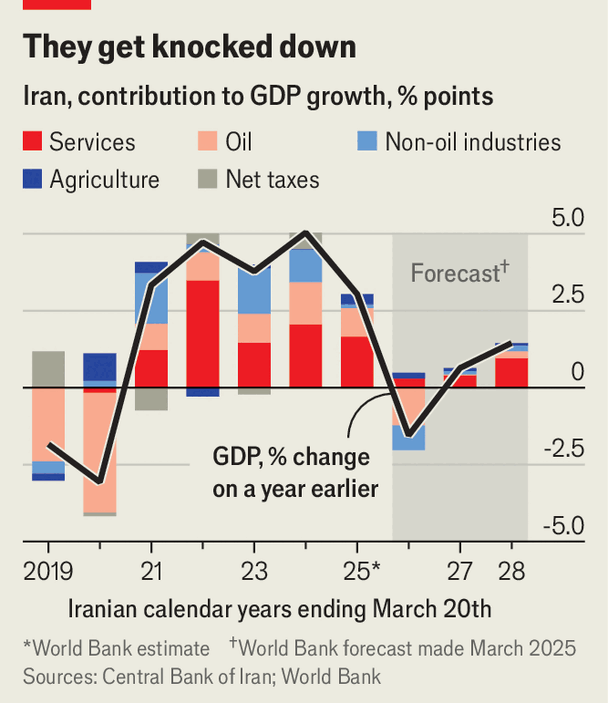
Iran enters the post-war period confronting a structural contradiction that no peace proposal, however generous, can fully resolve in the short term. The country needs hard currency at a scale it has not commanded since before the 2018 reimposition of US sanctions, yet the very mechanism that would deliver that currency — unrestricted crude exports priced in dollars — remains the central bargaining chip in the negotiations now moving through Islamabad.
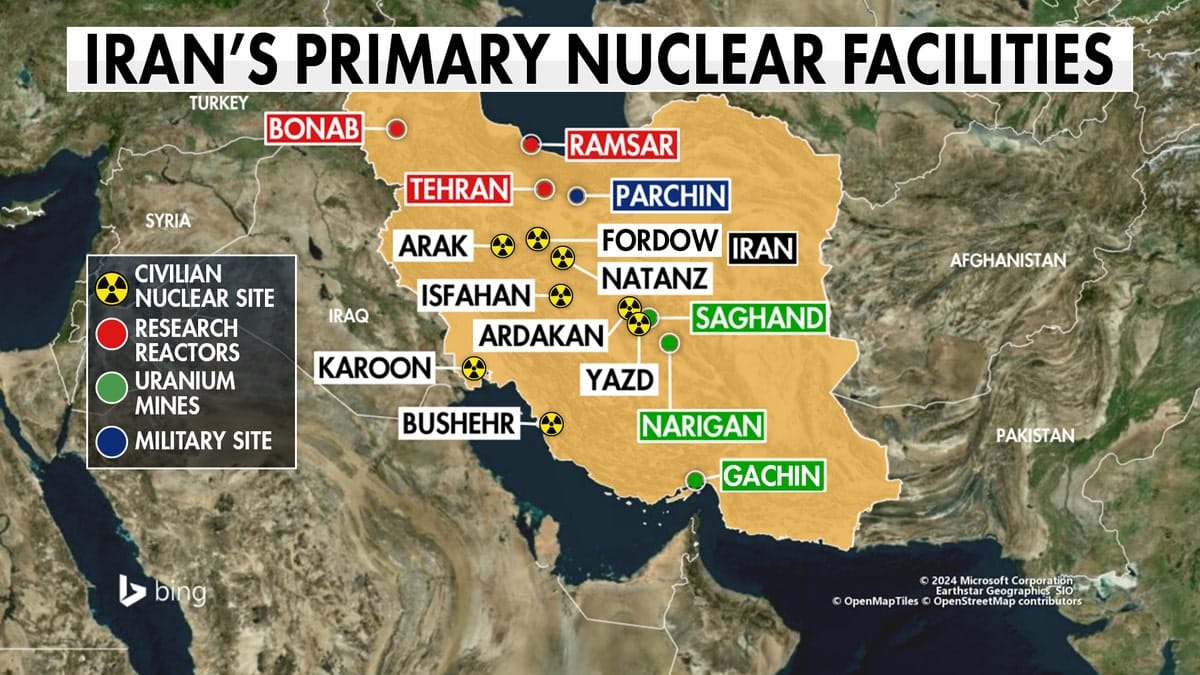
The damage profile, as outlined in coverage from Reuters and Iran International over the past 48 hours, spans energy infrastructure, refineries, ports, and the dual-use facilities that drew the heaviest US-Israeli strikes. Each of these categories carries not just a replacement cost but a productivity-loss tail: a refinery offline for eighteen months is not merely a construction expense, it is foregone export revenue compounded by the need to import refined products in the interim. Iran's pre-war crude export baseline — running through grey channels predominantly to Chinese independent refiners — was the only liquidity bridge keeping domestic budgets functional. That bridge has been partially severed.
Sanctions Relief as the Hidden Variable
What makes this moment historically distinct from previous Iran-West confrontations is that sanctions relief is no longer a discretionary diplomatic gesture — it is the load-bearing assumption beneath any credible reconstruction plan. Tehran cannot rebuild on internal savings alone, and the traditional Chinese and Russian financing channels have their own constraints: Beijing is unwilling to extend large unsecured exposures to a counterparty whose oil it already buys at a discount, and Moscow is itself a sanctions-constrained creditor.
This is why the revised proposal expected Friday matters beyond its immediate ceasefire terms. Any document that does not address the staged unwinding of secondary sanctions on Iranian crude — particularly the mechanisms governing payment settlement and shipping insurance — will be functionally a military document, not an economic one. And without the economic component, the political pressures inside Iran to reconstitute deterrence rather than rebuild infrastructure will only intensify in the months ahead.
Oil Market Implications and the Gulf Producer Calculus
The market shocks Reuters has tracked since the conflict began have already forced a quiet recalibration across Gulf capitals. A sustained removal of Iranian barrels from the market would, in classical analysis, benefit fellow OPEC+ producers through higher realised prices. But the actual experience of the last sixty-one days has demonstrated that war-driven oil spikes are double-edged: they enrich producers in the short term while accelerating the long-term substitution efforts of consuming nations and damaging the demand baseline that underwrites every Gulf budget out to 2035.
Doha has consistently taken the longer view. Qatar's LNG-anchored export model is structurally less exposed to crude price volatility than its neighbours, but it is acutely exposed to anything that threatens the freedom of navigation through the Strait of Hormuz — through which the bulk of Qatari LNG transits. Every day the Pakistan-mediated talks fail to convert ceasefire into durable settlement is another day in which the insurance premiums on Hormuz transits remain elevated and in which the long-term reliability narrative that Qatar sells to its Asian customers is subtly degraded.
Qatar's Position: The Mediator That Was Not Asked, Yet Remains Indispensable
It is notable that the current track is running through Pakistan rather than through Doha, which has historically been the venue of choice for Iran-West indirect engagement. The reasons are situational rather than structural — Islamabad's particular relationships with both Tehran and Washington made it the path of least resistance for this specific phase — but Qatar's centrality to any durable post-war architecture is unchanged.
Three reasons stand out. First, Qatar holds the trust of both the Iranian foreign ministry and the US administration in a way few capitals do, and any reconstruction financing mechanism that involves international guarantees will at some point require a venue where both sides can sit indirectly. Second, Qatar's own economic interests — gas market stability, freedom of navigation, regional risk premia — align with the substantive content of any sustainable settlement. Third, the post-2017 blockade experience taught Doha precisely how reconstruction-from-isolation politics work, and that institutional memory is genuinely scarce in the region.
Qatari diplomacy in the coming weeks will likely focus less on the ceasefire mechanics — those are Pakistan's lane for now — and more on the financial architecture that would allow sanctioned oil revenue to be channelled into verifiable reconstruction expenditure. Variants of this model have been discussed in the past for Iraqi and Lebanese contexts; the Iranian application would be larger and more politically charged, but the underlying logic of escrow accounts tied to specific reconstruction line items is well-established.
The Sixty-Day Horizon
The next two months will determine whether the post-war period becomes a rebuilding phase or a re-armament phase. The decisive variables are not technical — Iran's reconstruction requirements can be costed by any competent engineering firm — but political: does the revised proposal Iran sends Friday contain language on phased sanctions relief that Washington can accept, and does the Hegseth posture at this week's hearings reflect a bureaucracy ready to convert military success into economic settlement?
For Doha, the working assumption should be that the ceasefire holds in name but the sanctions-relief negotiations drag through the summer, with intermittent flare-ups. In that scenario, Iranian oil revenue stays compressed, reconstruction proceeds at one-third the pace Tehran needs, and the political space inside Iran for hardliners arguing that diplomacy failed to deliver gradually expands. That is the outcome regional mediators must work hardest to prevent — not because it favours any particular party, but because it is the scenario in which the next sixty-one days look uncomfortably like the last.