
← Analysis
AnalysisDeep Research
Sudan's Civil War: A Catalyst for Regional Instability in Chad
The escalation of Sudan's civil war into Chad is deepening humanitarian crises and regional instability.
Qatar Standard Editorial·Friday, February 27, 2026·7 min read
The civil war in Sudan, which erupted on April 15, 2023, has not only devastated the nation internally but has also catalyzed regional instability, particularly affecting neighboring Chad. The conflict has resulted in a staggering death toll, with estimates suggesting as many as 400,000 fatalities, and has displaced over eleven million people, creating a humanitarian crisis of unprecedented scale.
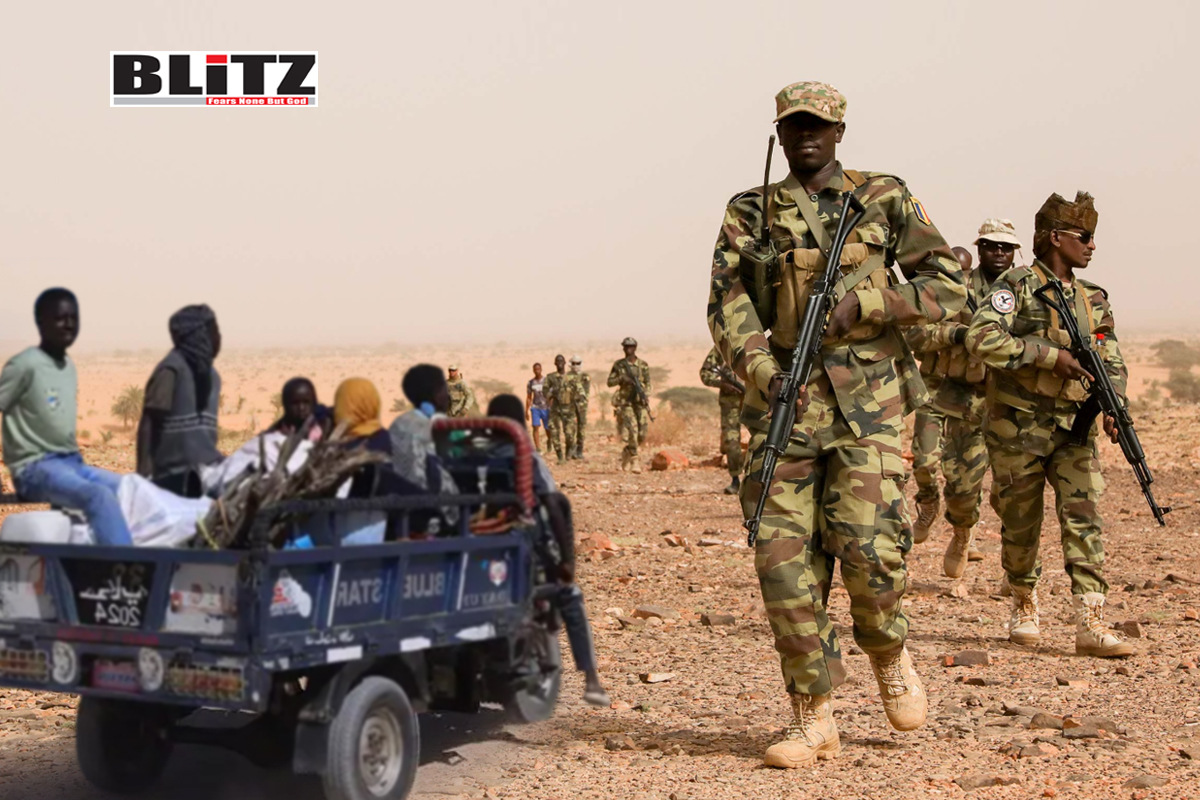
As the violence intensified, significant cross-border ramifications emerged, notably the influx of over four million Sudanese refugees into Chad. This mass movement has overwhelmed refugee camps and strained Chad's already precarious political and security situation. The situation has been further exacerbated by cross-border attacks, particularly by the Janjaweed militia, which has a history of ethnic targeting and violence. These assaults have not only heightened tensions but have also directly implicated the Sudanese government, which has been accused of complicity in these cross-border operations.
The Janjaweed's incursions into Chad have been marked by coordination with Chadian rebel groups, further destabilizing the region. The violence has led to new refugee flows and has drawn international attention to the dire need for humanitarian assistance. Despite ongoing mediation efforts, the leaders of Sudan's warring factions, the Sudanese Armed Forces (SAF) and the Rapid Support Forces (RSF), have shown little willingness to cease hostilities, complicating efforts to stabilize the region.
As the conflict continues unabated, the repercussions for Chad and the broader region remain severe. The humanitarian crisis, compounded by deteriorating food security, threatens to trigger what the World Food Programme has warned could become the world's largest hunger crisis. The international community faces an urgent challenge to address the escalating violence and its spillover effects, as time runs short to prevent further destabilization.
The roots of Sudan's ongoing conflict are deeply embedded in its complex history, marked by economic competition and colonial legacies that have exacerbated ethnic and political divisions. The Darfur region, in particular, has been a flashpoint due to its harsh environmental conditions and competition over dwindling resources. As the desert encroaches upon arable land, tensions have intensified among communities vying for survival, fueling long-standing grievances and hostilities.
Sudan's colonial past has played a significant role in shaping its current turmoil. Under the Anglo-Egyptian Condominium, which lasted until Sudan's independence in 1956, the country was administered in a manner that reinforced regional disparities. The colonial powers favored the northern, Arab-dominated regions, marginalizing the southern and western areas, including Darfur, which were largely non-Arab and less developed. This historical neglect laid the groundwork for deep-seated divisions that have persisted into the present day.
Darfur's legacy of conflict is a critical factor in understanding the current hostilities. The region has been embroiled in violence since the early 2000s, when the Sudanese government and allied Janjaweed militias launched brutal campaigns against rebel groups and civilian populations. This period of intense violence, characterized by ethnic targeting and mass atrocities, has left a lasting impact on Sudan's social fabric. The Janjaweed, now integrated into the Rapid Support Forces, continue to play a central role in the ongoing conflict, perpetuating cycles of violence and displacement.
The interplay of these historical and economic factors has created a volatile environment in Sudan, with repercussions that extend beyond its borders. As the conflict spills into Chad, the legacy of colonialism and resource competition continues to drive instability, highlighting the urgent need for comprehensive solutions that address both the immediate humanitarian crisis and the underlying historical grievances.
Chad's internal political landscape is marked by fragility, making it particularly vulnerable to the spillover effects of Sudan's civil war. The country has long grappled with political instability, characterized by frequent changes in leadership and a history of coups. This precarious situation is exacerbated by the presence of numerous armed groups operating along the Sudan-Chad border, which further destabilizes the region. These groups, often with shifting allegiances, have been known to collaborate with Sudanese factions, including the Janjaweed, in cross-border attacks that target civilian populations.
The porous nature of the Sudan-Chad border facilitates the movement of these armed groups, allowing them to exploit the instability in both countries. This has resulted in a cycle of violence that not only affects the immediate border areas but also poses a significant threat to Chad's overall security. The Chadian government, already stretched thin by internal challenges, struggles to effectively manage these threats, leading to a heightened risk of further destabilization.
Regional instability has profound implications for Chad's governance and security apparatus. The influx of refugees fleeing the conflict in Sudan places additional strain on Chad's limited resources, complicating efforts to maintain order and provide basic services. This situation is compounded by the fact that Chad itself is dealing with its own humanitarian challenges, including food insecurity and poverty, which are exacerbated by the regional turmoil.
As Chad navigates these complex security challenges, the international community's support is crucial in bolstering its capacity to manage the spillover effects of Sudan's civil war. Addressing the root causes of instability, including the activities of armed groups and the humanitarian crisis, is essential for ensuring Chad's long-term stability and security.
The humanitarian crisis resulting from Sudan's civil war has had a devastating impact on civilians, particularly in Chad, which has become a refuge for those fleeing the conflict. Since the outbreak of hostilities on April 15, 2023, more than four million Sudanese have sought safety in neighboring countries, with Chad bearing a significant portion of this burden. The influx of refugees has overwhelmed existing camps, stretching resources to their limits and creating dire living conditions.
International organizations have mobilized to address the urgent needs of these displaced populations. The United Nations High Commissioner for Refugees (UNHCR) and other humanitarian agencies are actively working to provide essential services, including shelter, food, and medical care. However, the scale of the crisis has outpaced the available resources, leading to severe shortages and heightened vulnerabilities among the refugee communities.
Food insecurity is a critical concern, as the influx of refugees has compounded existing challenges in Chad. The World Food Programme has warned of the escalating hunger crisis, with millions at risk of malnutrition due to insufficient food supplies. This situation is exacerbated by the logistical difficulties of delivering aid to remote and insecure areas, further complicating relief efforts.
Health crises are also prevalent in the overcrowded refugee camps, where inadequate sanitation and limited access to clean water increase the risk of disease outbreaks. The spread of infectious diseases, such as cholera and malaria, poses a significant threat to both refugees and host communities, necessitating urgent intervention to prevent further loss of life.
The international community's response remains crucial in mitigating the humanitarian impact of Sudan's civil war on Chad. Enhanced support and coordinated efforts are needed to address the immediate needs of refugees and to build resilience against future crises. Without sustained intervention, the humanitarian toll on civilians will continue to escalate, undermining regional stability and security.
The international response to Sudan's civil war has been marked by a series of unsuccessful mediation efforts, reflecting the complexities of the conflict and the challenges of achieving peace. Despite numerous attempts by regional and international actors to broker a ceasefire, the leaders of the Sudanese Armed Forces (SAF) and the Rapid Support Forces (RSF) have remained entrenched in their positions, unwilling to compromise. This intransigence has thwarted diplomatic initiatives and prolonged the suffering of civilians.
The United Nations has played a central role in addressing the crisis, deploying special envoys and convening peace talks aimed at de-escalating the violence. However, these efforts have been hampered by the lack of consensus among key stakeholders and the deep-rooted mistrust between the warring factions. The UN's appeals for humanitarian access and protection of civilians have often gone unheeded, as fighting continues unabated.
Compounding the challenges are the actions of external powers that have taken sides in the conflict, further complicating mediation efforts. Regional actors, each with their own strategic interests, have provided support to different factions, effectively internationalizing the conflict. This external involvement has not only fueled the violence but also made it more difficult for neutral parties to facilitate negotiations.
The African Union and the Intergovernmental Authority on Development (IGAD) have also been involved in mediation efforts, yet their initiatives have faced similar obstacles. The lack of a unified approach and the competing agendas of member states have undermined their ability to exert meaningful influence over the parties involved.
As the situation in Sudan deteriorates, the need for a coordinated international response becomes increasingly urgent. Enhanced diplomatic engagement and a concerted effort to address the underlying drivers of the conflict are essential for any hope of a sustainable resolution. Without such measures, the prospects for peace remain bleak, and the humanitarian crisis will continue to escalate, with dire consequences for the region.
The ongoing civil war in Sudan poses a significant threat to regional stability, particularly in the Sahel region. The conflict's spillover into Chad has already exacerbated existing tensions and could potentially lead to increased violence and instability across the region. The influx of refugees into Chad, estimated at over four million, places immense pressure on the country's already fragile infrastructure and resources, increasing the likelihood of conflict over scarce resources.
Moreover, the chaotic environment created by the civil war presents an opportunity for extremist groups to exploit the situation. The porous borders and weak governance in the Sahel region provide fertile ground for groups such as Boko Haram and al-Qaeda in the Islamic Maghreb (AQIM) to expand their influence. These groups could leverage the instability to recruit fighters, establish new bases, and launch cross-border attacks, further destabilizing the region.
In the long term, the consequences for Sudan, Chad, and neighboring countries could be severe. Sudan's continued instability threatens to undermine any efforts at national reconciliation and economic recovery, while Chad faces the risk of internal conflict as it struggles to accommodate the massive influx of refugees. Neighboring countries, already grappling with their own security challenges, may find themselves drawn into the conflict, either through direct involvement or as a result of increased refugee flows and cross-border violence.
Looking ahead, the international community must closely monitor the situation and prepare for potential scenarios that could unfold. Key indicators to watch include the movements and activities of extremist groups, the capacity of Chad and other neighboring countries to manage the refugee crisis, and any shifts in the dynamics of the Sudanese conflict. A failure to address these issues could lead to a broader regional crisis, with far-reaching implications for peace and security in the Sahel and beyond.