

Qatar's Gas in Numbers: What a Closed Hormuz Is Holding Back
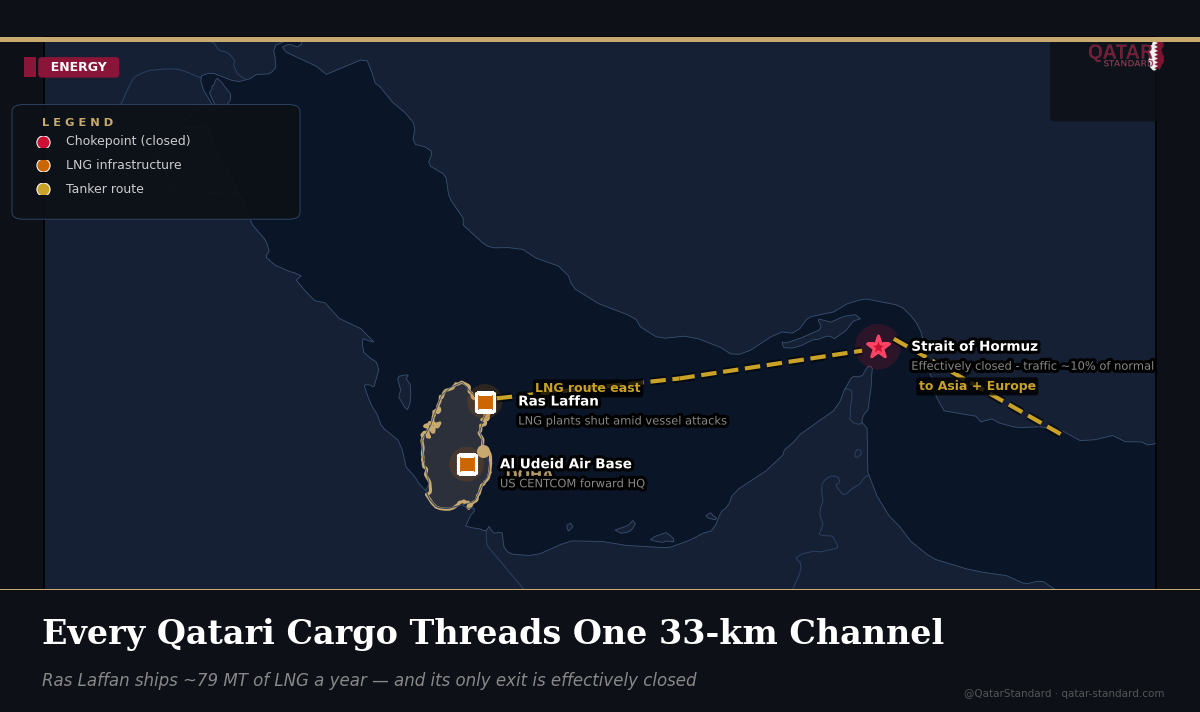
Three months into the Gulf's worst crisis in decades, the cost of a closed Strait of Hormuz can now be counted. Tanker traffic through the channel is running at roughly a tenth of normal levels, QatarEnergy has shut production at Ras Laffan after repeated attacks on shipping, and the global gas market is discovering how much it leaned on a single 33-kilometre passage.
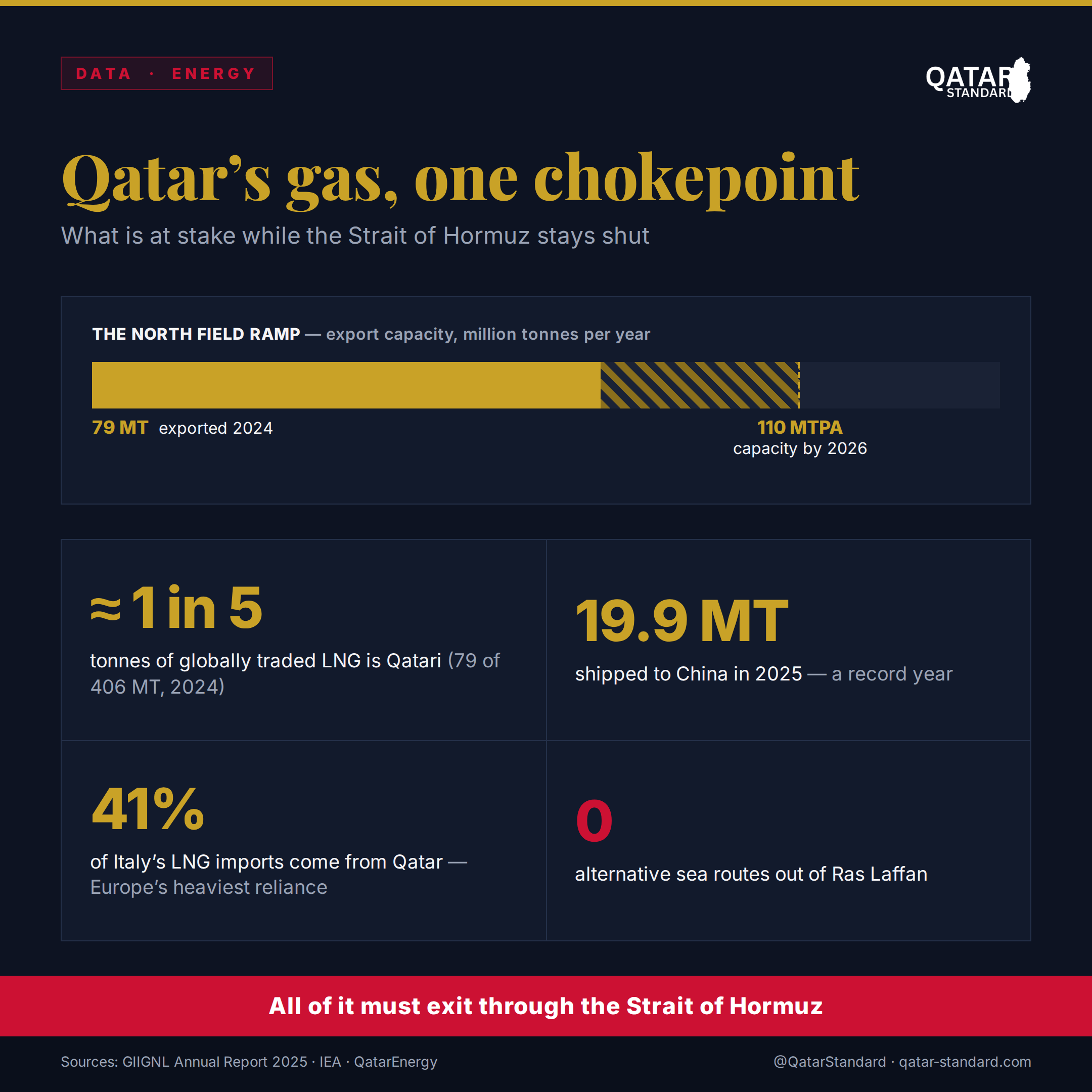
The dependence is straightforward to measure. Qatar shipped about 79 million tonnes of LNG in 2024 — nearly one in five tonnes traded globally, according to GIIGNL's 2025 annual report. China alone took a record 19.9 million tonnes in 2025. Italy sources 41 percent of its LNG imports from Qatar, the heaviest reliance in Europe. None of those cargoes has another way out: unlike Saudi crude, part of which can be diverted overland to the Red Sea, every Qatari molecule must exit through Hormuz.
The timing sharpens the bind. QatarEnergy's North Field expansion was built to lift export capacity from 77 to 110 million tonnes a year through 2025-26, the largest single addition of LNG supply anywhere in the world. That capacity is now ramping up behind a closed gate. Buyers are not waiting: as Qatar Standard reported this week, Asia's coal demand is set to jump by some 70 million tonnes in 2026 as utilities fall back on the cheaper fuel while gas stays scarce.
Doha's position is unlike any other producer's. As we set out when this war began, the same conflict that lifted oil-indexed contract prices has put the volumes themselves at risk — the state that gains most from higher energy prices is the one least able to keep selling. Hosting Al Udeid Air Base, the forward headquarters of US Central Command, has not exempted Qatari gas from a closure aimed at Tehran.
What to watch from here: whether loadings resume at Ras Laffan and on what insurance terms; whether North Field cargoes find buyers under long-term contracts or sit as stranded capacity; and how long Asian utilities keep burning coal that was supposed to be on its way out. The strait has closed before and reopened. The 33 kilometres have not gotten any wider.
النسخة العربية
غاز قطر بالأرقام: ماذا يحجب إغلاق مضيق هرمز عن العالم
بعد ثلاثة أشهر على اندلاع أسوأ أزمة يشهدها الخليج منذ عقود، صار بالإمكان قياس كلفة إغلاق مضيق هرمز بالأرقام. فحركة الناقلات عبر القناة تجري عند نحو عُشر مستوياتها الطبيعية، وأوقفت قطر للطاقة الإنتاج في راس لفان بعد هجمات متكررة على السفن، فيما يكتشف سوق الغاز العالمي حجم اعتماده على ممر واحد لا يتجاوز عرضه 33 كيلومتراً.
هذا الاعتماد قابل للقياس بوضوح. فقد صدّرت قطر نحو 79 مليون طن من الغاز المسال في عام 2024، أي ما يقارب طناً من كل خمسة أطنان متداولة عالمياً بحسب التقرير السنوي لرابطة مستوردي الغاز المسال "جيغنل" لعام 2025. واستوردت الصين وحدها 19.9 مليون طن في عام 2025 في رقم قياسي، فيما تحصل إيطاليا على 41 في المئة من وارداتها من الغاز المسال من قطر، وهي أعلى نسبة اعتماد في أوروبا. ولا تملك أي من هذه الشحنات مخرجاً بديلاً: فبخلاف النفط السعودي الذي يمكن تحويل جزء منه براً إلى البحر الأحمر، يجب أن تمر كل شحنة غاز قطرية عبر هرمز.
ويزيد التوقيت من حدة المأزق. فقد صُمم مشروع توسعة حقل الشمال لرفع الطاقة التصديرية من 77 إلى 110 ملايين طن سنوياً خلال 2025-2026، وهي أكبر إضافة منفردة لإمدادات الغاز المسال في العالم، لكن هذه الطاقة الجديدة ترتفع اليوم خلف بوابة مغلقة. والمشترون لا ينتظرون: فكما أوردت "قطر ستاندرد" هذا الأسبوع، يُتوقع أن يقفز الطلب الآسيوي على الفحم بنحو 70 مليون طن في عام 2026 مع عودة شركات الكهرباء إلى الوقود الأرخص في ظل شح الغاز.
Source tweet
Qatar's gas, one chokepoint: 79 million tonnes a year, a fifth of world LNG, zero alternative routes — and Hormuz is effectively closed. The numbers, mapped.
More Stories
 Gulf
GulfQatar's Emir says government revenue fell 42% in first half of 2026
 sports
Third Straight Asian Games Gold for Qatar's Beach Volleyball Pair
 Iran
IranEight US Marines injured in Iranian missile strike on vessel in Strait of Hormuz
 Iran
Iran