

Turkey Built Somalia's Military. Now Its Drones Are Accused of Targeting a Political Rival
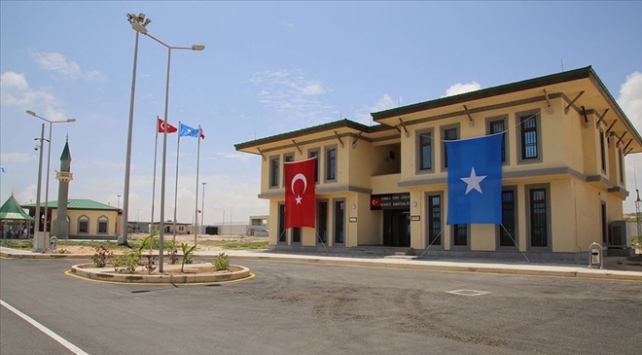
Somalia, a country on the Horn of Africa still fighting a decades-long war against the al-Shabaab insurgency, has spent the past decade building its federal military almost entirely around a single foreign patron: Türkiye. That relationship is now facing an uncomfortable question. A drone strike this week hit the home of a senior former security official in a region contested between Somalia's federal government and a semi-autonomous state — and two separate, unconfirmed accusations now point in different directions about who was behind it.
The footprint
Türkiye's military presence in Somalia is not a minor partnership. TÜRKSOM, Turkey's largest overseas military base, sits on the outskirts of Mogadishu, the Somali capital, and has trained Somali soldiers since 2017. Turkey's ambassador to Somalia, Mehmet Yılmaz, has said Ankara has trained roughly a third of Somalia's military — about 15,000 to 16,000 personnel — according to Anadolu Agency, Turkey's state news agency. Turkish-made Bayraktar TB2 armed drones have flown in support of Somali government operations against al-Shabaab since 2021. In January, Turkey deployed F-16 fighter jets to Mogadishu's Aden Adde International Airport, reported by Middle East Eye, The War Zone and AFP — the first time Turkish combat aircraft have operated from Somali soil.
The pattern
This is not the first time Turkish drones have shaped the balance of power in a fragile, allied state rather than a state Türkiye is formally at war with. In Libya, Turkish TB2s were decisive in 2019-2020 in helping the UN-recognized Government of National Accord repel an assault by rival commander Khalifa Haftar, a turning point documented by the Washington Institute for Near East Policy. In Ethiopia's 2021 Tigray war, Turkish drones supported federal government forces against Tigrayan rebels — reporting from the New York Times, Al Jazeera and The New Humanitarian notes Turkey was one of several foreign suppliers, alongside China and the UAE, not the sole actor. In Syria, Turkish drones have backed the Turkish-aligned Syrian National Army against the Kurdish-led Syrian Democratic Forces from 2019 through the present. The common thread: Turkish drone support tends to go to whichever side already hosts Turkey's own strategic and economic interests — not necessarily the side with the stronger legal claim.
Why this matters past the Horn of Africa
For Washington, Turkey's expanding footprint in Somalia sits directly on the Gulf of Aden shipping lane, near Yemen and the Bab-el-Mandeb strait — a corridor the US Navy has spent two years defending from Houthi attacks. Turkey is a NATO member, which makes this an alliance-management story as much as an Africa story: Ankara is building independent military infrastructure and arms relationships that don't run through Washington. For Israeli readers, the relevant lens isn't that Turkey is arming Somalia against Israel — there's no evidence of that — it's that Turkey continues to expand its own military "strategic perimeter" along the Red Sea and Horn of Africa coastline, a region where Israel also has security interests (it struck Houthi targets in Yemen in 2024-2025). Neither government has framed this as an Israel-facing move, and this piece isn't claiming otherwise.
The new development
On the night of September 3, 2026, a drone strike hit a house in Doolow, a town in Gedo, a region in southwestern Somalia on the borders with Ethiopia and Kenya that is claimed by both Jubaland — a semi-autonomous state — and the federal government in Mogadishu. The house belonged to Gen. Mahad Abdirahman Aden, known as "Shub," who commanded Somalia's Custodial Corps, the national prisons service, until he was removed from that post in March 2026 amid rising tension between Mogadishu and regional administrations. Photos from the scene show a partially destroyed roof, shattered walls and an impact crater; it remains unclear whether Mahad was present at the time or whether anyone was hurt — earlier reports of specific injuries have not been independently confirmed.
Two different, uncorroborated accusations have since emerged, and they point at different actors. Jubaland officials blame Turkish drones directly. Separately, former Somali prime minister Hassan Ali Khaire has accused President Hassan Sheikh Mohamud's federal government of carrying out the strike itself — without citing evidence, and without specifying what aircraft were used. Neither Türkiye nor Mogadishu has responded to either accusation: not a denial, not a confirmation, from either side, as of publication.
What both versions share is the backdrop, not the conclusion: a federal government whose drone fleet, fighter jets and roughly a third of its trained soldiers trace back to a single foreign patron, now facing accusations — from a breakaway region on one side, a former prime minister on the other — that it is turning that capability on its own domestic rivals rather than only on al-Shabaab.
The timing lands inside an already tense year. Mogadishu has pushed constitutional amendments extending presidential terms, deepening its standoff with regional states. And the UN Security Council's December 2023 decision to lift Somalia's three-decade arms embargo remains under active scrutiny for exactly this kind of scenario: external arms flowing into an internal power struggle rather than only the fight against al-Shabaab.
Nothing here proves that Turkish aircraft struck a Somali political rival, or that Mogadishu ordered a strike on its own former general. What's harder to dispute is the architecture that made both accusations plausible enough to make international headlines: a NATO ally spent over a decade building Somalia's federal government a military machine, and that government is now facing competing claims — from a regional government and from one of its own former prime ministers — that it is using force against its own political rivals.
النسخة العربية
تركيا بنت جيش الصومال... والآن طائراتها المسيّرة متهمة باستهداف خصم سياسي
أنفقت الصومال، الدولة الواقعة في القرن الأفريقي والتي لا تزال تخوض حربًا مستمرة منذ عقود ضد حركة الشباب المتشددة، العقد الماضي في بناء جيشها الفيدرالي بالاعتماد شبه الكامل على راعٍ أجنبي واحد: تركيا. وهذه العلاقة تواجه الآن سؤالًا محرجًا، بعدما أصابت غارة بطائرة مسيّرة هذا الأسبوع منزل مسؤول أمني سابق رفيع المستوى في منطقة متنازع عليها بين الحكومة الفيدرالية الصومالية وولاية شبه مستقلة، فيما برز اتهامان منفصلان وغير مؤكدين يشيران إلى جهتين مختلفتين.
الوجود العسكري التركي في الصومال ليس شراكة هامشية. فقاعدة "تُركسوم"، أكبر قاعدة عسكرية تركية خارج حدودها، تقع على مشارف العاصمة مقديشو، وتدرب الجنود الصوماليين منذ عام 2017. وقال السفير التركي لدى الصومال محمد يلماز إن أنقرة درّبت نحو ثلث الجيش الصومالي، أي ما بين 15 و16 ألف عنصر، وفق وكالة الأناضول التركية الرسمية. كما تحلّق طائرات "بيرقدار TB2" التركية المسلّحة دعمًا لعمليات الحكومة الصومالية ضد حركة الشباب منذ عام 2021. وفي يناير الماضي، نشرت تركيا مقاتلات F-16 في مطار أدن عدي الدولي بمقديشو، وهي المرة الأولى التي تعمل فيها مقاتلات تركية من الأراضي الصومالية، بحسب "ميدل إيست آي" و"ذا وور زون" و"فرانس برس".
وليست هذه المرة الأولى التي تُرجّح فيها الطائرات المسيّرة التركية كفة ميزان القوى داخل دولة حليفة هشة لا تخوض تركيا معها حربًا رسميًا. ففي ليبيا، كانت طائرات TB2 التركية عاملًا حاسمًا بين عامي 2019 و2020 في مساعدة حكومة الوفاق الوطني المعترف بها أمميًا على صد هجوم القائد المنافس خليفة حفتر. وفي حرب تيغراي الإثيوبية عام 2021، دعمت الطائرات التركية المسيّرة قوات الحكومة الفيدرالية ضد المتمردين، إلى جانب موردين آخرين كالصين والإمارات. وفي سوريا، تدعم الطائرات التركية "الجيش الوطني السوري" الموالي لأنقرة ضد "قوات سوريا الديمقراطية" بقيادة كردية منذ 2019 وحتى الآن. والقاسم المشترك: الدعم التركي بالطائرات المسيّرة يميل إلى الطرف الذي يخدم مصالح تركيا الاستراتيجية والاقتصادية القائمة أصلًا، وليس بالضرورة الطرف صاحب الحجة القانونية الأقوى.
Source tweet
Turkey built Somalia's military. Now its drones are accused of striking a political rival in Gedo — while a former PM accuses Mogadishu itself.
More Stories
 Gulf
GulfTurkey, Pakistan, Saudi military chiefs meet in Riyadh over Houthi threats
 Diplomacy
Netanyahu Calls Erdogan 'Tyrant,' Accuses Turkey of Cyprus Occupation at UN
 Diplomacy
Turkey Rejects Netanyahu's Accusations Against Erdogan at UN
 Africa
Somalia's humanitarian crisis deepens: millions face severe hunger and malnutrition
 Politics