
Turkey's Somalia Agreements: Energy Security Behind a Development Frame

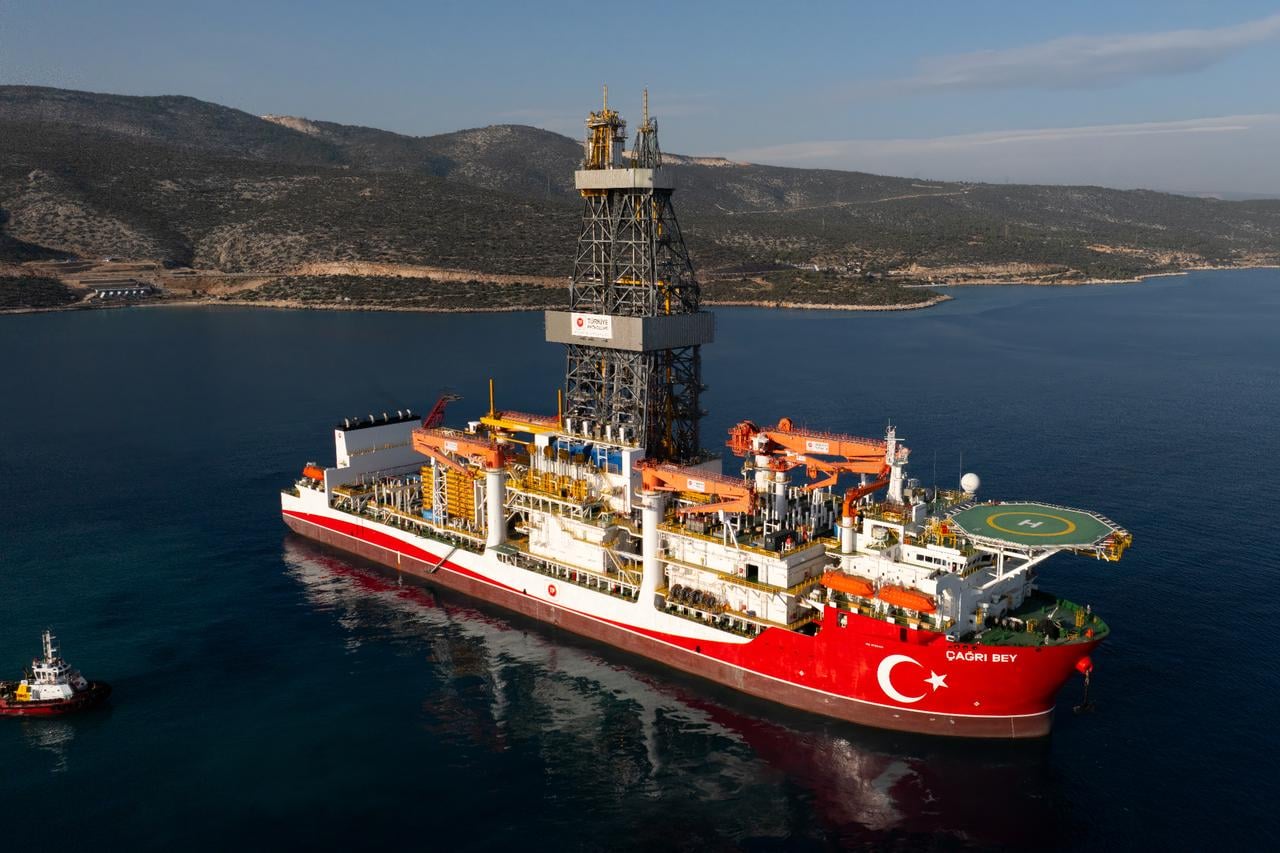
It would be a mistake to read Turkey's blueprint for the Somali coast as a development partnership that happens to be commercial. The structure runs the other way around. Ankara is one of the world's most energy-import-dependent major economies. It has spent a decade pursuing offshore hydrocarbons under conditions that more powerful neighbours have refused to grant it. In the spring of 2026, in the form of the Çağrı Bey drillship and a parliament-bypassing naval mandate, Turkey has found in Somalia the coastline that Cyprus, Greece and the Eastern Mediterranean would not give it.
The Somali interest is not the engine of this arrangement. It is the cover story.
The country that needs a coast
Turkey imports approximately ninety-three percent of its oil and ninety-nine percent of its natural gas. That structural dependence — the largest in the OECD outside Japan — is the single most important variable in Erdoğan-era Turkish foreign policy, and it has driven a fifteen-year campaign to transform Turkey from an energy buyer into an energy producer.
The campaign has, in its preferred theatre, failed. Turkey's offshore claims around Cyprus, in the Eastern Mediterranean, and over the disputed waters with Greece have produced confrontations with the European Union, near-misses with NATO members, and ultimately no commercially developable hydrocarbons under Turkish-flagged operations. Each time Ankara sent a drillship into contested waters, Brussels imposed sanctions and the underlying political cost mounted.
The lesson Ankara drew was not to abandon the offshore strategy. It was to relocate it to a coastline whose state could not say no.
Somalia, by 2024, had every property Ankara needed. A government in Mogadishu with extreme dependence on Turkish security backing. A federal parliament with no operational influence over hydrocarbons policy. A constitutional framework whose enforcement runs only to the city limits. A coastline of 3,300 kilometres patrolled by no one. And — most importantly — an Exclusive Economic Zone of 825,000 square kilometres that the World Bank and the African Union had quietly conceded was geologically prospective for hydrocarbons but commercially unbankable for any operator who would have to ask a parliament for permission.
TPAO, the Turkish state oil company, did not have to ask a parliament. It had to ask one president, in his final ninety days of constitutional mandate.
What the contract actually says
The bilateral hydrocarbons agreement, the operational details of which the Transparency Somalia Initiative has formally and publicly demanded be disclosed, grants TPAO exclusive rights to three offshore blocks. Before any revenue flows to the Somali state, TPAO recovers ninety percent of its costs. The remaining ten percent is the basis on which the entire Somali fiscal claim rests — and only after a ten-month deepwater drill targeting reservoirs that the Turkish operator itself describes as among the deepest attempted in offshore history.
The 90% clause is not a market term. Comparable East African petroleum framework agreements signed since 2010 — in Mozambique, Tanzania, Kenya, and Uganda — carry cost-recovery caps in the fifty-to-sixty-five percent range, royalty floors of twelve-and-a-half percent, mandatory equity stakes for the host national oil company, and ringfenced training and content obligations. The Somali agreement carries none of these protections. Mozambique, with a comparably weak state, secured better terms from ExxonMobil and Eni than Mogadishu obtained from a strategic ally.
The structural reading is unavoidable. Turkey is not paying market terms because Turkey is not contracting in a market. It is contracting in a captive bilateral arrangement in which the counterparty's bargaining power has been engineered downward by a parallel security relationship that the same counterparty cannot afford to lose.
The naval cover
The naval architecture exists to defend the energy architecture. From January 30 to February 25, 2026, Turkey deployed a three-ship task group — TCG Sancaktar, TCG Gökova, TCG Bafra — across the Gulf of Aden, the Somali coast and the Arabian Sea. The mission's official framing as an extension of Turkey's longstanding anti-piracy presence (originally launched in 2009) does not survive a reading of the operational footprint. The task group's primary function, by both timing and geography, is the security perimeter for the Çağrı Bey at Curad-1, 372 kilometres offshore.
In February 2026, the Turkish parliament extended the underlying maritime mandate and granted President Erdoğan broad discretion over scope and timing without further parliamentary authorisation. The Turkish legislature signed away its own oversight of an operation that it had just upgraded from policing to active force projection. The Somali parliament was not asked to ratify the corresponding bilateral pact at all.
This is what energy capture looks like when it is implemented correctly: the supply state's elected legislature and the host state's elected legislature are both bypassed in the same legislative quarter.
The fishing concession is the leakier piece
If Curad-1 is the ten-year prize, SOMTURK is the daily extraction. The joint Somali-Turkish fishing company, established in December 2025 and operated by an entity reportedly linked to the Turkish military, formalised its EEZ fishing concession on March 29, 2026.
The constituency on the losing end is identifiable. Somalia's coastal fishing communities — concentrated in Puntland, Jubaland, the Banaadir region around Mogadishu, and historically along the Galmudug shoreline — have for two decades been competing against unregulated foreign trawlers. Their adversary in court was nominally Mogadishu's failure to defend the EEZ. Their adversary in practice is now a Turkish-controlled joint venture that holds a legal concession to fish the same waters under naval protection that Somali artisanal fleets cannot match.
This is the dimension that Somali outlets such as Cirka News have placed at the centre of their coverage, and it is the part of the arrangement that domestic civic groups are most exercised about. The Turkish narrative is that SOMTURK formalises sovereignty. The reality on the water is that it formalises foreign access. Where Turkish vessels fish, Turkish vessels patrol. The artisanal Somali fleets that fished those waters informally for fifteen post-1991 years are now a third party in their own EEZ.
TURKSOM is not aid
Camp TURKSOM in Mogadishu, Ankara's largest overseas military base, has trained more than 15,000 Somali troops since 2017. The training is publicly framed as Turkish capacity-building support for a fragile state. Read alongside the energy and naval architecture, it serves a different function: it embeds Turkish doctrine, Turkish supply chains and Turkish political relationships into the Somali security forces that any future president would have to rely on to enforce — or to challenge — the inherited contracts.
A Somali successor administration that wished to renegotiate Curad-1 or SOMTURK on better terms would face the structural problem that the Somali military trained to defend the federal state was, in significant part, trained, equipped and re-supplied by the very foreign power being renegotiated against. That is not a failure of design. That is the design.
The arrival of the Çağrı Bey in April 2026 was deliberately accompanied by a delivery of logistics trucks and ammunition to the Somali National Army. The pairing of an energy ceremony with a defence handover is not a coincidence. It is the visible declaration of what the relationship actually is: an energy concession underwritten by a security dependency.
And then there is the Red Sea
Layer all of this — drillship, naval task group, fishing concession, training base, port operations, the December 2025 Turkish-built spaceport announcement — onto the geography, and the strategic surplus reveals itself. Turkey is not merely solving its energy-import problem. It is, in the same instrument, acquiring a permanent presence on the Western Indian Ocean coast that overlooks Bab el-Mandeb, the strait through which roughly twelve percent of global seaborne trade and a third of global container traffic transits between Asia and Europe.
The Houthi disruption of Red Sea shipping has, since late 2023, demonstrated what every naval planner already knew: whoever can project credible force into the Gulf of Aden holds a veto over Suez. Ankara has now, in pursuit of the energy contract it could not get in the Mediterranean, become a Red Sea power without ever explicitly being labelled one.
For Turkey, this is two strategic gifts wrapped as one commercial venture. For Somalia, it is one country's energy security underwritten by another country's coast.
The timing tells the story
Pay attention to when these milestones landed. The drilling commenced, the naval mandate extended, the SOMTURK concession formalised — all in the final ninety days of President Hassan Sheikh Mohamud's mandate, which expires by constitutional clock on May 15, 2026, with no completed elections and no agreed successor framework. A politically weakened president, governing past his clear democratic mandate, was the optimal counterparty for an extractive contract that no constitutionally legitimate successor would be likely to ratify on the same terms.
The contracts will outlast the administration that signed them. Whoever takes the oath on May 15 — or fails to — inherits a Somali coastline whose energy, fisheries and naval defence have been pre-allocated to a foreign power for the foreseeable future.
Why Doha should pay attention
Turkey is, in many files, a strategic partner of the Gulf — Qatar included. None of that requires endorsing every move in every theatre. The Somali arrangement is not a partnership tilted by circumstance. It is an extraction architecture engineered around an importing economy's domestic needs and exported, intact, to a coast that could not refuse.
The honest reading of Ankara's plan for the Somali coast is that it is competent, it is layered, and it is — in structure if not in vocabulary — colonial. The naval task group is real. The drillship is on station. The 90% cost-recovery clause is in writing. The parliamentary bypass is on the public record. And the southern lock of the Red Sea is now turning, slowly, toward Ankara's hand.
The country whose welfare the arrangement is officially built around is the one constituency whose interests are nowhere visible in the contracts.
Sources: Turkish Petroleum Corporation (TPAO) operational disclosures; Turkish Naval Forces Command task group records (January–February 2026); Somalia–Türkiye bilateral hydrocarbons and maritime defence framework agreements (2024 and February 2026); Transparency Somalia Initiative public statements; East African petroleum framework agreement comparators (Mozambique, Tanzania, Kenya, Uganda, 2010–2024); reporting by Cirka News and Somali domestic press, May 2026.
النسخة العربية
اتفاقيات تركيا والصومال: أمن الطاقة خلف واجهة التنمية
من الخطأ قراءة خريطة تركيا للساحل الصومالي بوصفها شراكة تنموية ذات بُعد تجاري. البنية تسير في الاتجاه المعاكس. أنقرة من أكثر الاقتصادات الكبرى اعتماداً على استيراد الطاقة في العالم. وقد قضت عقداً تسعى لإنتاج هيدروكربونات بحرية، وفق شروط رفض جيرانها الأقوياء أن يمنحوها إياها. وفي ربيع 2026، عبر سفينة الحفر "تشاغري بك" وتفويض بحري يتجاوز البرلمان، وجدت تركيا في الصومال الساحل الذي رفضت قبرص واليونان وشرق المتوسط أن يمنحوها إياه.
المصلحة الصومالية ليست محرّك هذا الترتيب. إنها قصة الغطاء.
بلد يحتاج إلى ساحل
Source tweet
Turkey doesn't care about Somalia. It cares about its own energy security and a foothold on the Red Sea. The Çağrı Bey drillship at Curad-1, the 90% cost-recovery clause, the parliament-bypassing naval mandate, the SOMTURK fishing concession — every layer is engineered around Ankara's interests. Somali fishing communities pay the cost. Mogadishu is the signature.
More Stories
 Economy
Qatar PM pledges to prioritise China energy supplies amid regional tensions
 Turkey
Turkey Built Somalia's Military. Now Its Drones Are Accused of Targeting a Political Rival
 Gulf
GulfQatar LNG Hit With 29 Cargo Cancellations as US Replaces Gulf Energy Supply
 Africa
Turkey's Expanding Grip on Somalia: Oil, Fisheries and Military Power
 Economy