

At the UN, Erdoğan demanded pressure on Israel. The tankers kept loading at Ceyhan
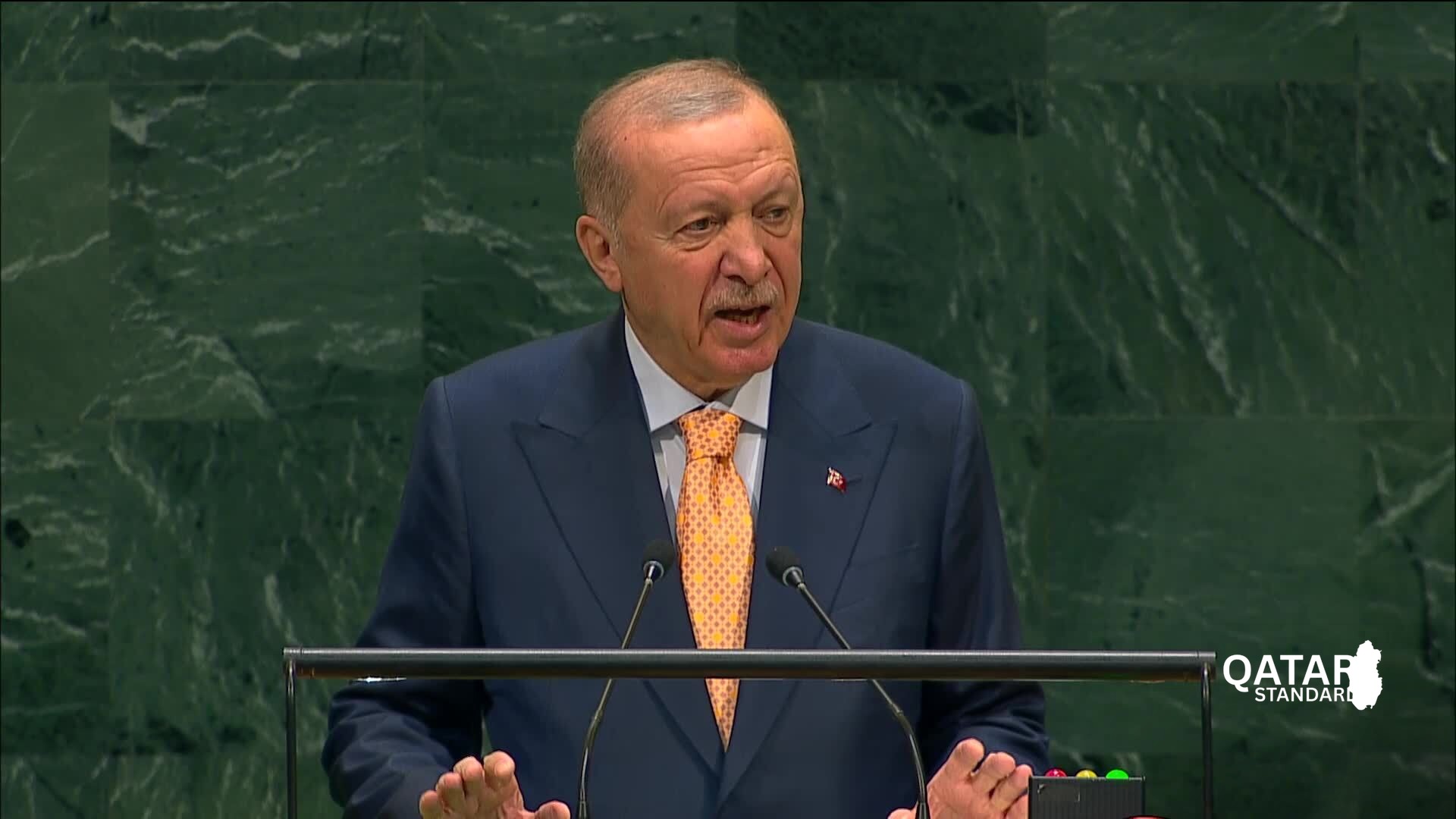
On 22 September, President Recep Tayyip Erdoğan used the UN General Assembly to condemn Israel in some of the harshest terms any head of state used that day. Gaza, he said, had become "the most inhumane and shameful concentration camp of our time." He called on member states to "exert greater pressure, more pressure on Israel." Israel's delegation walked out.
He also made a broader argument about fairness. "We are compelled to change the current mindset where international law is applied differently to the strong versus to the weak," Erdoğan said, according to the UN's English interpretation of his speech.
What he did not mention was the oil route that runs through his own country.
What the shipping data show
On 2 May 2024, Turkey's Trade Ministry suspended all exports to and imports from Israel. The government has repeated since then that the ban is total. In August 2025, Foreign Minister Hakan Fidan told parliament, "We have completely cut off our trade with Israel."
A report published this month by two research groups, Oil Change International and the Amsterdam-based SOMO, tracks where Israel's crude came from between October 2023 and June 2026. It uses the commercial ship-tracking service Kpler, supplemented by LSEG market data, port-inspection records and satellite images.
It names two traders, Swiss-based Vitol and Dubai-based Heritage Petroleum. Together they delivered 22 million barrels to Israel over the period, about 11 per cent of the country's crude imports.
The report's shipment tables list 17 cargoes that loaded at the Turkish terminal of Ceyhan after the ban took effect and sailed to Israel. Qatar Standard's count of those tables puts the total at roughly 15 million barrels. The report states that all ten of Heritage's cargoes left from Turkey. The most recent Ceyhan loading in the data was the tanker Nissos Serifos on 28 April 2026, bound for the Israeli port of Ashkelon.
One tanker, the Kimolos, appears six times on the Ceyhan-to-Ashkelon route after the ban. An earlier investigation by the campaign group Stop Fuelling Genocide tracked the same ship in December 2024, reporting that it switched off its location transponder in the eastern Mediterranean while declaring other destinations.
The report says satellite imagery "confirms that several of the identified vessels docked and offloaded at Israeli ports at relevant times." It concludes that "Turkish authorities may not be enforcing the export ban."
Turkish oil, or oil through Turkey?
The distinction matters, and Ankara's defence depends on it.
The crude is not Turkish. It is pumped in Azerbaijan and carried 1,768 kilometres through the Baku–Tbilisi–Ceyhan (BTC) pipeline across Georgia and Turkey. At Ceyhan, on Turkey's Mediterranean coast, it is loaded onto tankers. A consortium led by BP owns the pipeline. Turkey's state oil company, TPAO, holds a 6.53 per cent stake, and state-run BOTAŞ International operates the Turkish section.
Ashkelon, on Israel's southern coast north of Gaza, is the main import terminal of the state-owned Europe Asia Pipeline Company (EAPC). The report says most of the traders' cargoes were delivered there.
The oil is not Turkish, Turkey's state companies do not sell it, and a 1999 treaty with Azerbaijan and Georgia obliges Turkey to keep the pipeline running. Ankara's position is that it has no control over where the oil goes after loading.
Ankara's answer
A Turkish foreign ministry source told Middle East Eye on 3 September that "no vessel loading from Ceyhan is authorised or executed with Israel designated as the delivery destination." The source said BOTAŞ "holds no commercial involvement or discretionary authority regarding the purchase or sale of the transported crude oil," and that exporters using BTC "strictly respect Türkiye's decision to terminate trade relations with Israel."
The same source offered an explanation that also describes the gap: "Once tankers depart from the Ceyhan terminal, the ownership of the cargo may be transferred to third-party buyers, creating a possibility for subsequent changes to the final destination while in transit."
The Energy Ministry made the same points in November 2024, when it called similar allegations "completely baseless."
Vitol told Middle East Eye it "operates its business in full compliance with all applicable laws and regulations." Heritage did not respond to MEE. In its reply to the report's authors, Heritage's Istanbul subsidiary Shiptech Maritime said neither company had ever been "engaged in the sale, purchase, transportation or trading of crude oil with Israel."
The Istanbul question
That subsidiary is where the report presses hardest. Heritage owns two shipping-services companies registered in Istanbul, Shiptech Maritime and Limosa Trading Logistics. Shiptech advertises services at Turkish terminals "including Ceyhan."
The report says it is "not clear" whether either firm plays a role in the Israel-bound cargoes. If they provided loading or tugboat services for them, the authors argue, that "would be enabling a prohibited activity, and should be investigated further." Shiptech declined to say whether it had provided such services.
The opposition
In Ankara, the challenge has come mainly from the left. On 24 September, İskender Bayhan, an Istanbul MP for the small Labour Party (EMEP), filed a written parliamentary question to Vice-President Cevdet Yılmaz under the headline "Bombast at the podium, trade through the back door." He asked why the "oil valves" at Ceyhan remain open while "the cries of Palestinian children are invoked from the podium."
Qatar Standard found no statement in the past two weeks from the main opposition CHP or the pro-Kurdish DEM Party linking the speech to the oil route, although members of both parties, and of the Islamist New Welfare Party, have raised the BTC flows in parliament before.
What remains unknown
The data do not show who bought each cargo on arrival or what it was refined into. They do not show whether any Turkish official knew a given tanker was heading to Israel. Nor do they show whether Heritage's Istanbul firms handled those tankers. About half of the shipments to Israel in the Kpler data list no charterer at all, so the true volume may be higher.
None of the evidence shows that Turkey sold oil to Israel. It shows that a ban on trade with Israel has not stopped crude loaded on Turkish soil from reaching Israeli ports, and that Ankara's explanation rests on what happens after the tankers leave.
Erdoğan's words at the UN were uncompromising toward Israel. The oil route through Turkey has been much less so.
النسخة العربية
في الأمم المتحدة طالب أردوغان بالضغط على إسرائيل.. والناقلات واصلت التحميل من ميناء جيهان
في 22 سبتمبر/أيلول، استخدم الرئيس التركي رجب طيب أردوغان منبر [الجمعية العامة للأمم المتحدة](https://webtv.un.org/en/asset/k13/k13vvze39c) ليدين إسرائيل بعبارات كانت من بين الأشد التي استخدمها أي رئيس دولة في ذلك اليوم. قال إن غزة أصبحت "أكثر معسكرات الاعتقال لاإنسانيةً وعاراً في عصرنا"، ودعا الدول الأعضاء إلى "ممارسة ضغط أكبر، مزيد من الضغط على إسرائيل". وغادر الوفد الإسرائيلي القاعة.
وطرح أردوغان كذلك حجة أوسع حول العدالة، إذ قال بحسب الترجمة الإنجليزية الرسمية للأمم المتحدة: "نحن مضطرون إلى تغيير العقلية السائدة التي يُطبَّق فيها القانون الدولي على الأقوياء بشكل مختلف عنه على الضعفاء".
أما ما لم يذكره، فهو طريق النفط الذي يمر عبر بلاده.
More Stories
 Politics
International Delegations Walk Out During Netanyahu's UN Speech
 Iran
IranIranian President Pezeshkian Meets Lebanese PM Salam at UN General Assembly
 Diplomacy
Iran delegation emphasizes resilience, diplomacy at UN General Assembly
Erdogan calls on Qatar's Emir to increase pressure on Israel
 Diplomacy